client stories

A New Beginning

CERRC helped Taylor achieve a fresh start.

Taylor’s journey to sobriety was not a linear journey. His path came with ups and downs, challenges that caused him to take steps backwards after months of fighting to get ahead. He found himself caught in a cycle of homelessness and addiction that continued for a decade. Sometimes it was the pressure of working as many as four jobs at once, sometimes it was codependency, and other times it was the well-meaning attempt to go back to the streets to try and help others that ended up pulling Taylor back into that cycle. 

Taylor found comfort and strength in his faith during his recovery.

Taylor was homeless for a year and a half before finding help at ECS. He hit rock bottom and decided that enough was enough. “My last three weeks of using were very depressive,” he said. “I was addicted to heroin and I was using on an everyday level for so long: for probably six months to a year to where I was dependent on it.” In that time, Taylor turned to God. He relinquished the reins, trusting that he would be guided on the right path. Soon enough, Taylor found himself at a residential men’s treatment facility and upon graduation, found ECS Central East Regional Recovery Center (CERRC) as his next step. 

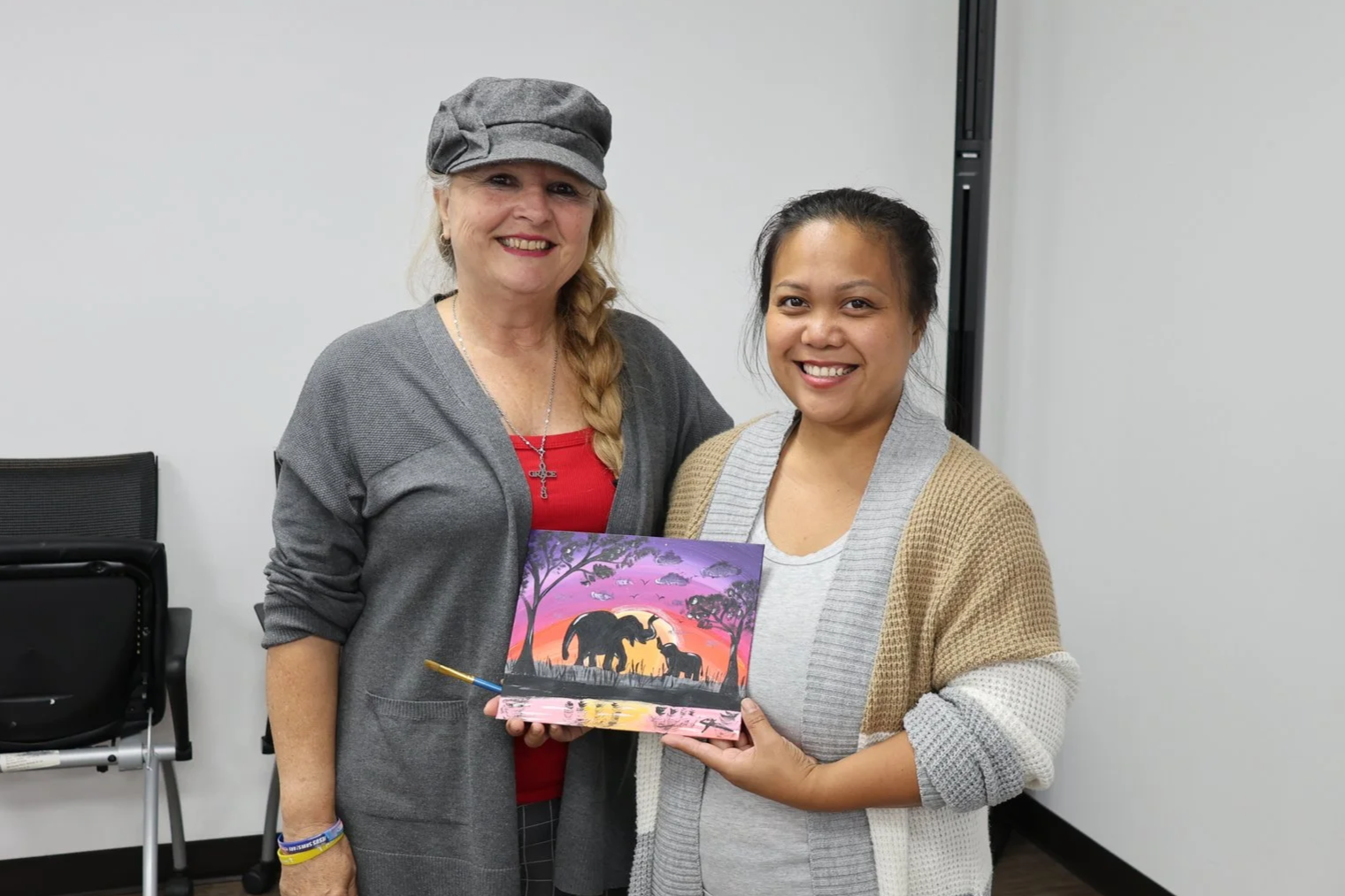
At CERRC, Taylor gained valuable perspective, relapse prevention skills, and supportive community. CERRC placed him in a sober living community and surrounded him with a group of counselors and peers that helped him remain focused and steady on his journey to recovery. He felt that the staff were intentional and compassionate; they took the time to truly know him and create a family feeling within his group. “That group that was established and that kind of camaraderie really was what helped get me through,” he said. “While we were doing painting or whatever activity it was, we'd be talking about discovery and getting to know each other, you know, celebrating each other's successes.” 

The supportive community of CERRC and the sober living uplifted Taylor on his journey.

After graduating from the program at CERRC, Taylor remained in his sober living community. “One of the things I've lost in my past was, I get so focused on my life and my direction that I would just lose connection with everyone else,” he shared. Now he has people to hold him accountable. He enjoys the communal support at the sober living and continues to attend meetings regularly. 

Taylor also found community beyond CERRC. Work in particular brought a special connection. A devout employee, Taylor would be the first person on site every day. The superintendent of the site would also arrive early. During those early mornings, they began to share their life stories with each other. As fate would have it, the superintendent was also sober and saw qualities in Taylor that reminded him of his own recovery journey. The superintendent, recognizing Taylor’s effort at work, recommended him for a position at the property management company of the building they were constructing. 

The interview went well and Taylor was hired, but a few weeks later the company contacted him after examining his criminal record. “They were like, ‘we just wanted to let you know that we never hire anyone who has a felony on their record, but we're going to give you this opportunity, please don't mess it up,’” he said. They gave him a three-month probationary period which he breezed through. “I'm now a supervisor; I'm making more money than I've ever made in my whole life.”  

Taylor now owns a car, his credit score is improving, and he has inner peace. “If you would have asked me a year ago if I would be where I am today, I would have said ‘no.’ I thought I was going a completely different direction,” he said. He shared that he used to be scared to have control of his life, but now he feels he has the guidance he needs from CERRC, his peers, and – above all – God. 

Taylor’s advice for new CERRC clients, or just other people recovering from substance use, is “to give themselves a chance, be open minded, and take that first step.” Taylor hopes they can trust that God has a plan for them. 

ECS’ outpatient treatment program at CERRC helps people like Taylor recover from substance use and begin again.

CERRC was a powerful part of Taylor’s journey, and he shared that it was the people there that made the difference for him. “What I felt with everyone here [at CERRC] was so beautiful,” he said. “It just tells how much everyone cares.” No matter how busy the counselors got, they always had time for him and cared for him in a real way. “I felt like my life was worth it. And I know everybody else did, too.” In a letter to ECS, Taylor wrote, “Through hard work, both on my inner self and on the job, I have been blessed with an opportunity to begin a new life.” 

ECS CERRC helps people like Taylor reclaim their lives and start over, but that help is not possible without generous support. Your donation can provide toiletry kits, food, bus passes, and more for clients, supporting their needs as they take the first steps of recovery. To give your support to CERRC and other ECS programs visit www.ecscalifornia.org/donate.  

Home is Where the Heart Is

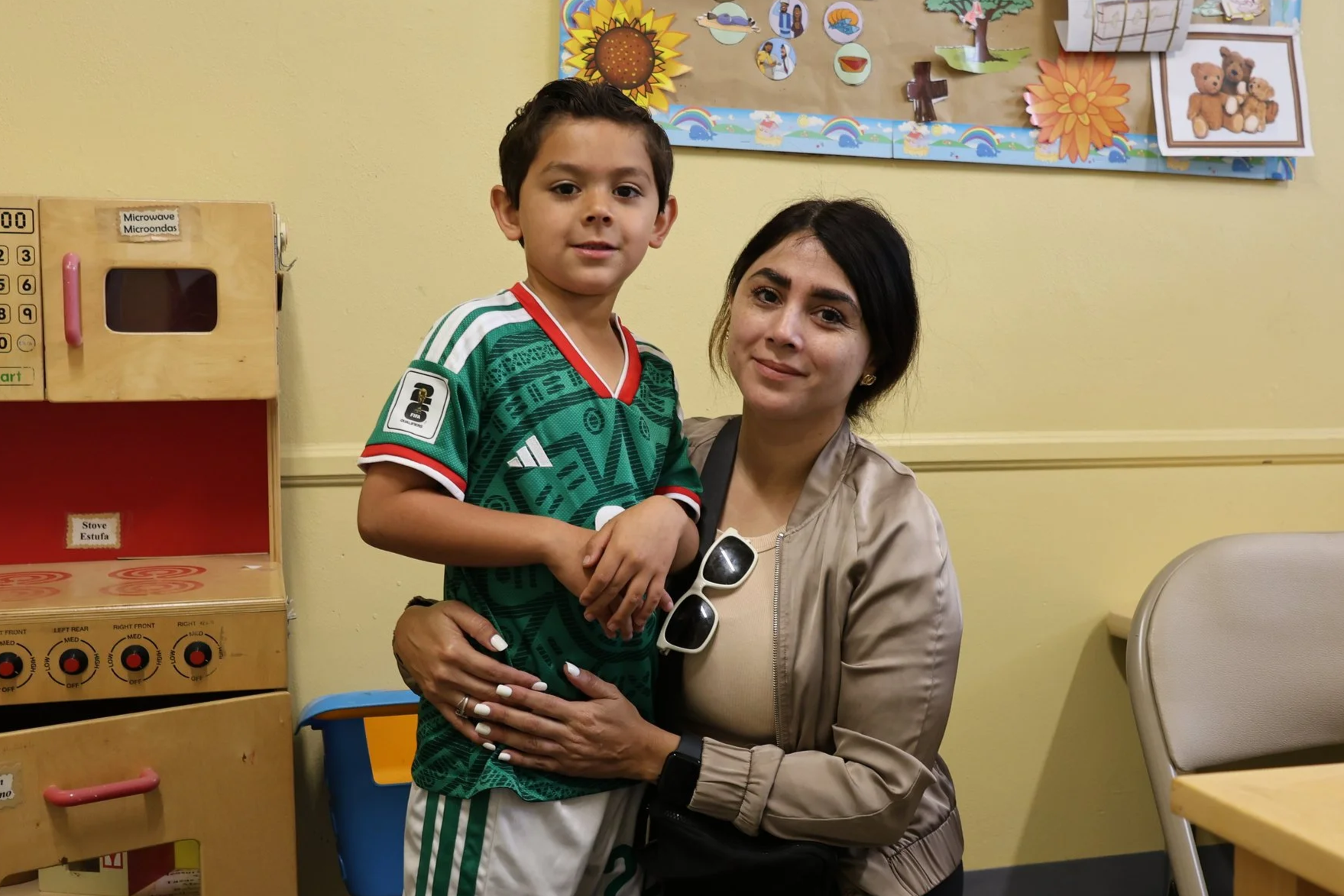
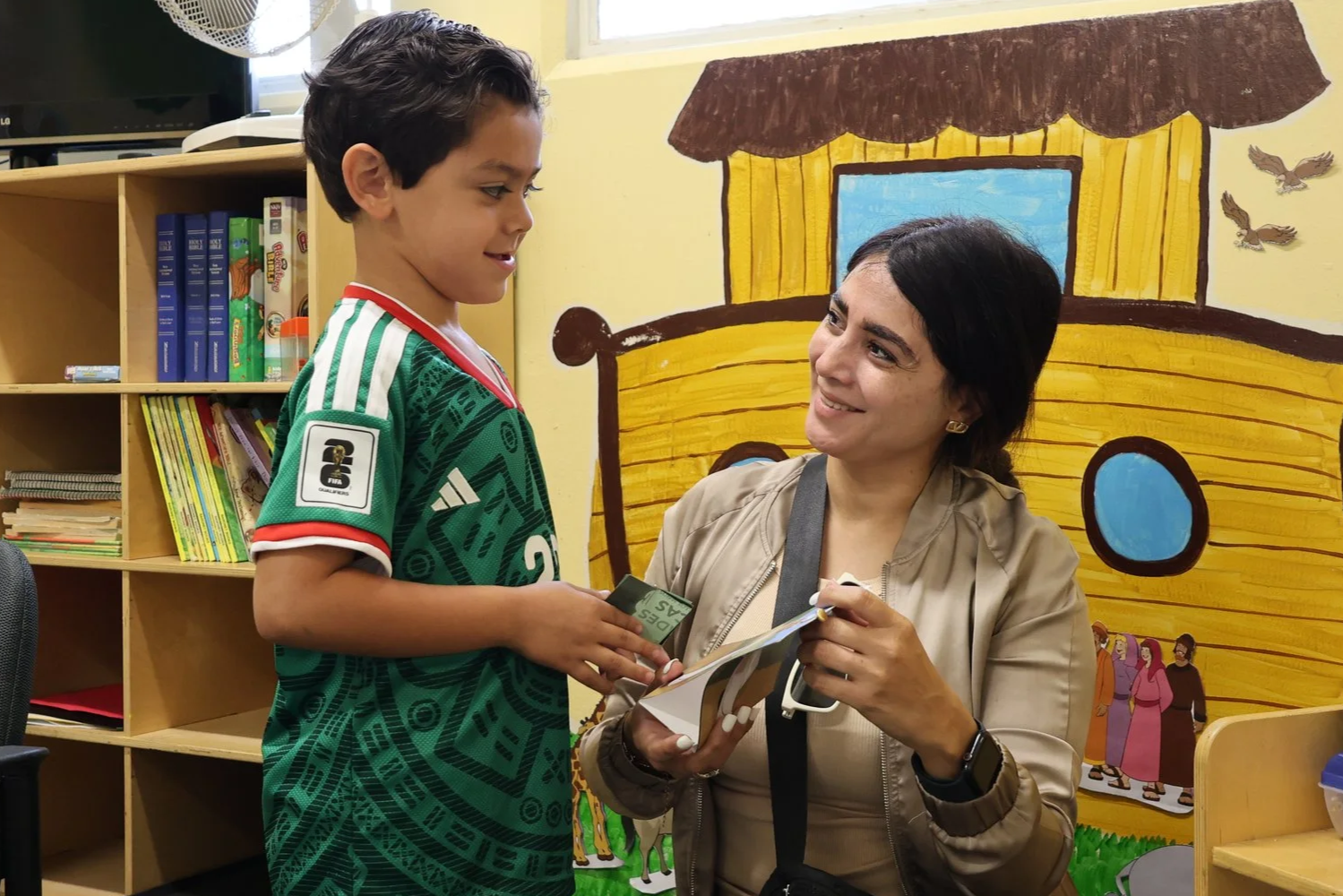
Maria and her cat Joey. January 2026.

Maria first shared her story with ECS in 2024 in “Finding Silver Linings.” Her story made it clear that her resilience and optimism were more powerful than the trauma she experienced. With the help of ECS Uptown Safe Haven (UTSH), Maria was finally able to shed the weight of the struggles that were keeping her down. 

A year and a half later, Maria gave a second interview, this time in the coziness of her own home — the first apartment she’s ever had. “I've never owned anything, and I'm very blessed to have it. I get to be me here. This is my home sweet home, where my heart is.”  

The apartment may be Maria’s private sanctuary, but she happily shares it with someone else: her cat, Joey. Maria adopted Joey from a homeless man outside of a grocery store. When he asked Maria if she had a good home for his kitten, she could proudly respond “yes.” “He's my companion. He makes me happy,” she said. “I know God put him here for me. I know that 100%. I think ‘you didn’t have a home, and I didn't have a home,’ so there you go. We have a home together.”  

Maria expressed that — in many ways — life is new to her now, and she is taking it all in with gratitude, loving every moment. She loves learning new things, enjoys immersing herself in nature walks, and is appreciative of everything she has. 

Giving back is also a passion of Maria’s. She frequently gives money and food to homeless people she sees, and if she can’t give anything away, she makes sure to just be kind and bring a smile to their face. “Making sure that they smile, that makes me happy. That's the happiest times of my day,” she said.  

The most important component of Maria’s life is her spirituality. “To me, being close to God is the most important thing. This is because all of this [is] because of God,” she said, gesturing to her new home. Maria values being close to God and often experiences signs from Him, which she refers to as “synchronicity.” “I find Band-Aids all the time, at least once or twice a week... that's a healing thing,” Maria explained. “I live on God's path. I stay on God's path. And that's why he gives me signs all the time.” 

Maria sits in her new apartment. January 2026.

When Maria still lived at UTSH, a vision board hung on her wall. That vision board is now stored in her closet because everything on it has come true. She brought it out and examined the cut-out images of cats, an iPhone, and words like “healing” and “hope” stuck to the board, all of which she has now. 

She has also progressed from the singular gratitude journal she was writing in every day in 2024 to stacks of dozens of journals; every page filled with lists of the blessings in Maria’s life. “I never missed a date,” she said. “Having gratitude for me goes a long way. I think it makes me very strong, because I got very strong.” 

One thing Maria especially has gratitude for is UTSH. “Safe Haven, that's my second family. I don't know what I would do without them,” she shared. “They got me to where I'm at, and they're my family. I don't have real family here so they're my family. That's my second home here.” 

Maria is grateful for the life she has built around herself and the help UTSH offered to get her to where she is now. As she put it, she is thankful to have a “beautiful home” and a “more beautiful cat.” Maria is set on staying sober from substance use for the rest of her life and living life to the fullest every day. 

Uptown Safe Haven is a residential facility that provides transitional housing and supportive services to chronically homeless single adults with severe mental health issues. To learn more about Uptown Safe Haven, visit https://www.ecscalifornia.org/uptown-safe-haven-1. 

Inside Linda’s Mental Health Recovery at Uptown Safe Haven

When Linda experienced a period of psychosis, her entire life shifted. She was in and out of hospitals and crisis houses, living in complete instability. She lost her source of income as a result, and her car had been destroyed in a flood. She had no choice but to drop out of school and she was asked to leave the choir she sang with as a result of her mental state.

Linda was lost with no clear direction of where to turn next.

That’s when she found ECS Uptown Safe Haven (UTSH).

UTSH gave her a safe and peaceful space where she could find her footing and look toward the future. With the help of staff, group meetings, and her fellow UTSH residents, Linda took control of her life again.

Now, she has a car, an income source, mental peace, and even a dog. She has also been welcomed back to the choir where she regularly sings and writes with an incredible community.

UTSH helped Linda create roots and grow to new heights. To learn more about the transitional housing program, visit Uptown Safe Haven — Episcopal Community Services.
Linda with Development Director Tim Whipple (left) and Resident Assistant Keith Franklin (right). October 2026.

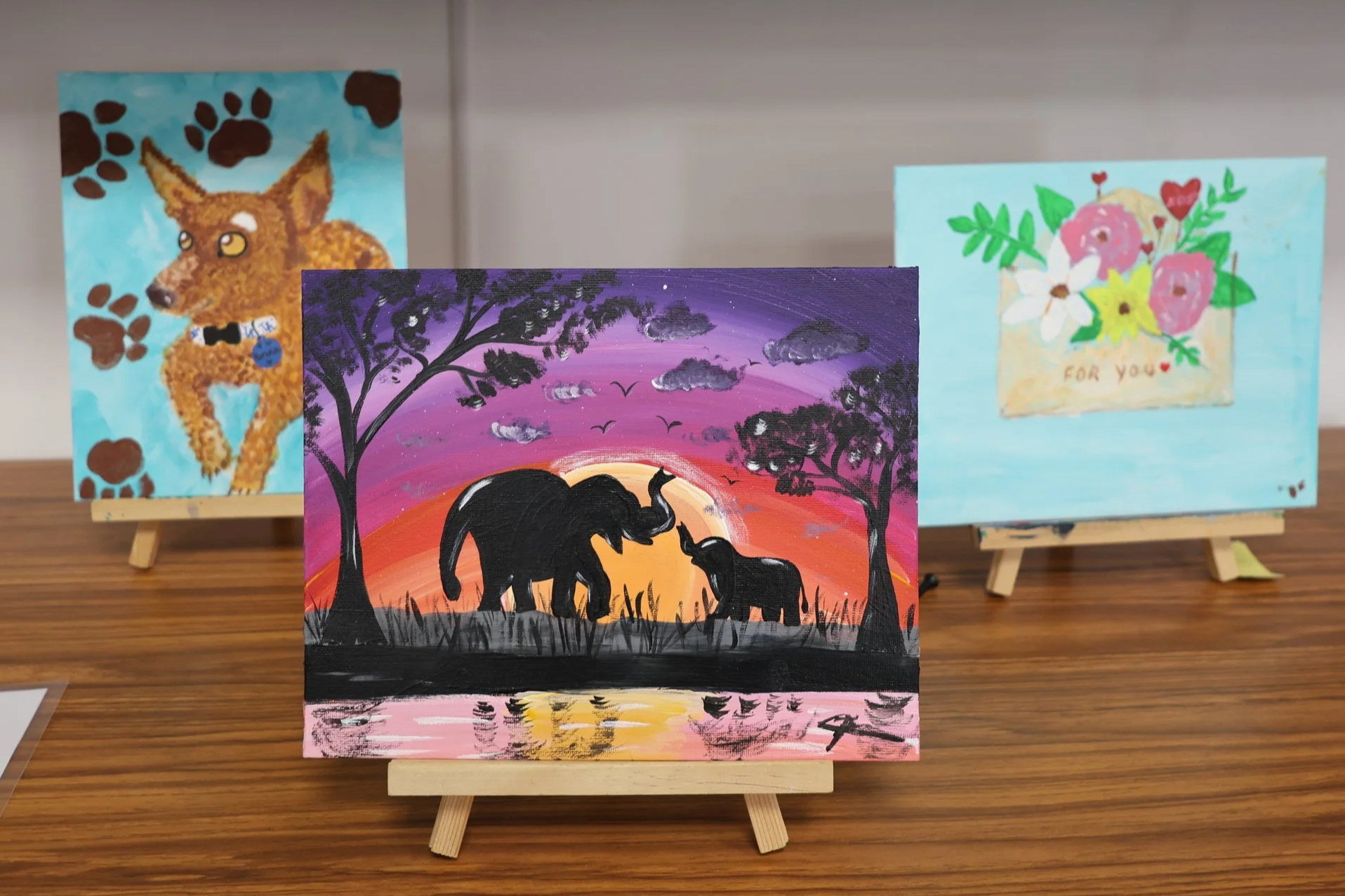
Uptown Safe Haven residents and staff at the annual UTSH Art Show. October 2026.

How ACCORD and C-HRT Safe Haven Helped Princeton Thrive

Princeton found his footing with support from ACCORD and C-HRT’s services. October 2025.

When Princeton and his son’s mother drove down to San Diego from LA one day in 2017, he had no idea how his life was about to change. 

The birth of Princeton’s son was unplanned; Princeton had known his son’s mother for only a few months before she became pregnant. He recalled feeling excited to become a father, but also heavy due to the nature of the situation. 

In San Diego, they got into an argument over a parenting disagreement. Princeton felt tired of having no control over his own life, his role as a father, or the family life he had envisioned, so he decided to stay in San Diego on his own. 

Due to his sudden change in plans, Princeton had nowhere to go and ended up living on the street, but it wasn’t long before he found direction. While in the lunch line at Father Joe’s, recruiters offered him the chance to go to school with financial aid. “I was like, ‘alright, I'm homeless on the streets. The only way I'm gonna get off these streets, I'm gonna have to start and do something positive,’” he said. 

He began his program and got a job while going to school, waking up every morning at 5 a.m. to pack up his tent and prepare for the day ahead. 

Some things were looking up for Princeton, but the reality of his situation did not escape him. Still homeless and dealing with his choice to leave his family, Princeton turned to alcohol to cope with the mental weight of his decision. 

After some time, Princeton moved into an apartment and became sober for several years. When his mother passed away in 2021, Princeton remained steady and did not turn back to alcohol even in his grief. But two years later in 2023, he got a phone call that his brother had passed, as well. “So, then I got back to drinking and I couldn't stop. I got careless.”   

Substance use disorder (SUD) overtook Princeton’s life and before long he got a DUI. His aunt, who helped raise him, passed away and his grief led him to drink at the funeral. “I got into it with my sister out there, and so she wouldn't let me sleep at her house, so my drunk self tried to drive all the way back from LA to San Diego,” he said. “I hit two cars.” 

Princeton’s sister bailed him out of jail, and he was ordered to complete a six-month program at ECS ACCORD (Alcohol Counseling Community Outreach Drop-In) DUI program. 

ACCORD was a positive force in Princeton’s life. “The staff there were very helpful, my instructor was very considerate of me and my peers there,” he said. “That's why I'm here right now, I'm recovered, I'm doing amazing. I know better.” 

Princeton’s recovery journey had begun, but he had landed back in a state of homelessness. In 2024, Princeton was living in a large shelter. He shared that it was difficult for him to continue recovery in that environment. “A typical shelter, you're not going to get no peace there,” he said. “You can be doing everything positive... there's just too many negative distractions.”   

The security of C-HRT allows residents to focus on bettering their lives. October 2025.

Fortunately, Family Health Centers referred him to ECS C-HRT Safe Haven. Princeton was grateful to have “something more grounded; somewhere where I can thrive and work on myself.” 

Funny enough, Princeton did not know that ACCORD and C-HRT were both ECS programs, but both just so happened to be there to give him support when he needed it. “That's pretty divine,” he commented.  

The safety and stability of C-HRT was a “golden opportunity” for Princeton. “You got a free chance to really get your life together,” he said. 

While it wasn’t easy and he stumbled from time to time in the beginning, Princeton worked hard to better himself and now he is in recovery, working, and feeling great. 

Princeton shared how the comfort of C-HRT and the variety of amenities, provide much needed support for residents. Companionship is also a key part of the C-HRT support system. “I had a number of heartfelt conversations, motivated conversations from some of the most broken people here uplifting me at times and just gave me inspiration and motivation to go above my means or above the clouds,” Princeton shared. “There's a good spirit here. A great spirit here.” 

Princeton’s experience has inspired him to give back to others. Whether it's purchasing and setting up a tent for a homeless man he sees every day, so he has shelter from the rain or buying a bag of ice for a woman in need, he aims to give back as much as he can. 

He also takes pride in doing his part to care for the C-HRT facility, taking out the trash, vacuuming, and keeping his home clean. “You got to take care of your home,” he said. “This is our place. I'm like, ‘give back the blessing.’ The blessing gave you a bed and a blanket.” 

C-HRT provides more than just physical housing. It gives people like Princeton a place to work on themselves and create new beginnings. 

“I have self-obedience... [I] stay calm, stay peaceful, especially underneath pressure. Especially when [the world is] trying to test you, just stay kind,” Princeton shared. “The world is what you make it here.”  

ECS offers a variety of programs, all with the goal of breaking barriers and transforming communities. Learn more about the services of ACCORD and C-HRT Safe Haven that uplift our neighbors in need.