impact story

Inside Linda’s Mental Health Recovery at Uptown Safe Haven

When Linda experienced a period of psychosis, her entire life shifted. She was in and out of hospitals and crisis houses, living in complete instability. She lost her source of income as a result, and her car had been destroyed in a flood. She had no choice but to drop out of school and she was asked to leave the choir she sang with as a result of her mental state.

Linda was lost with no clear direction of where to turn next.

That’s when she found ECS Uptown Safe Haven (UTSH).

UTSH gave her a safe and peaceful space where she could find her footing and look toward the future. With the help of staff, group meetings, and her fellow UTSH residents, Linda took control of her life again.

Now, she has a car, an income source, mental peace, and even a dog. She has also been welcomed back to the choir where she regularly sings and writes with an incredible community.

UTSH helped Linda create roots and grow to new heights. To learn more about the transitional housing program, visit Uptown Safe Haven — Episcopal Community Services.

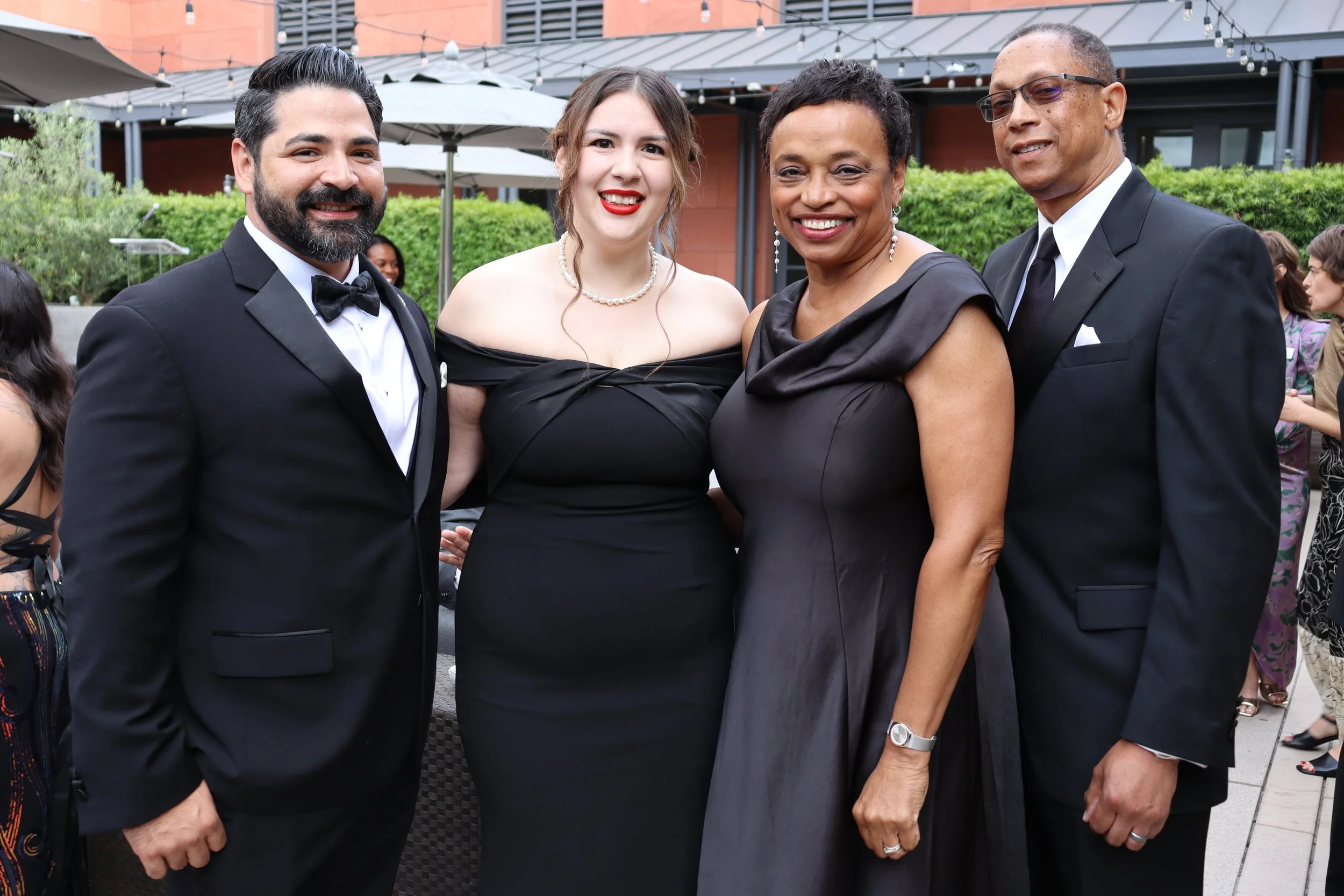
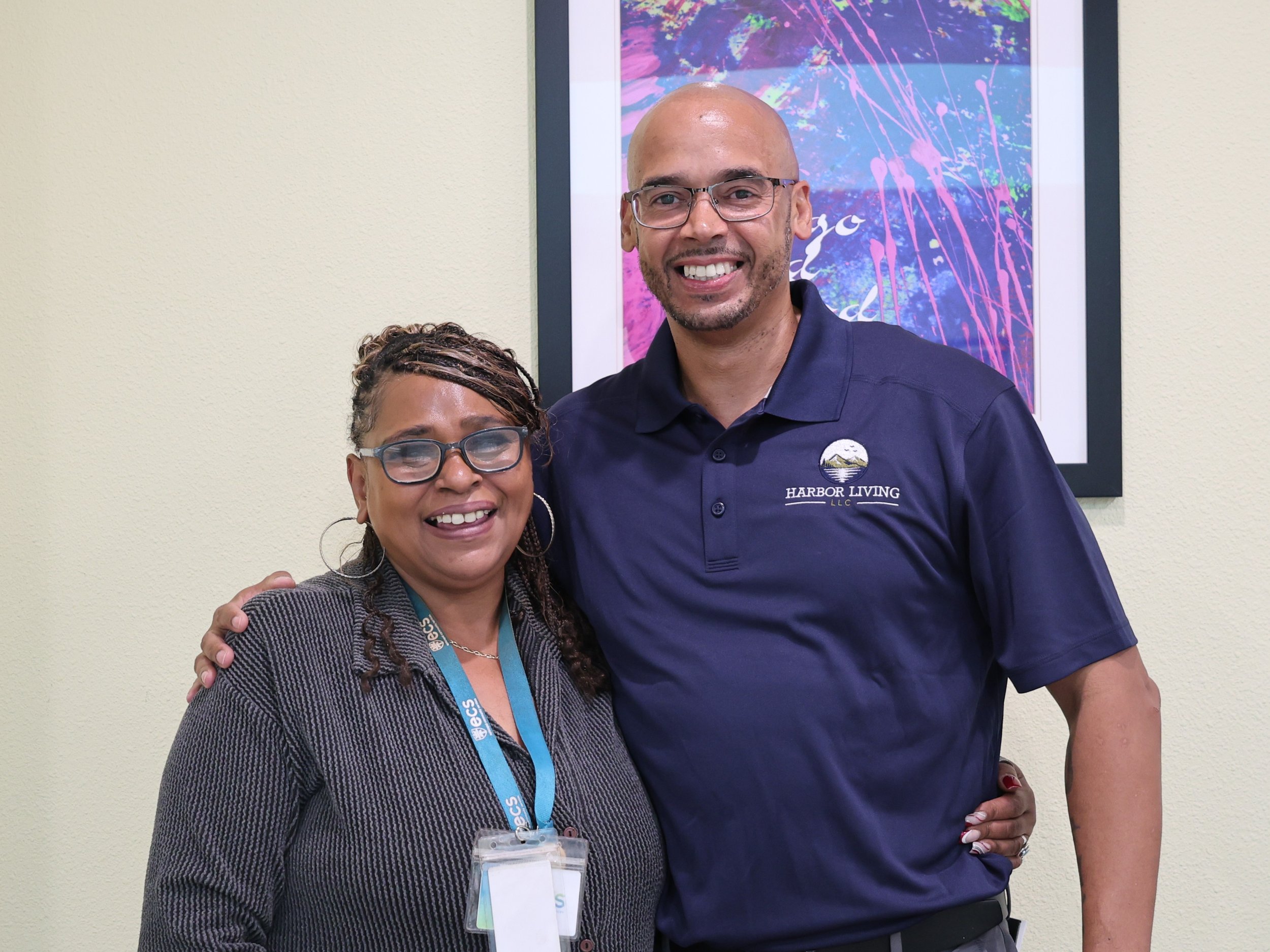
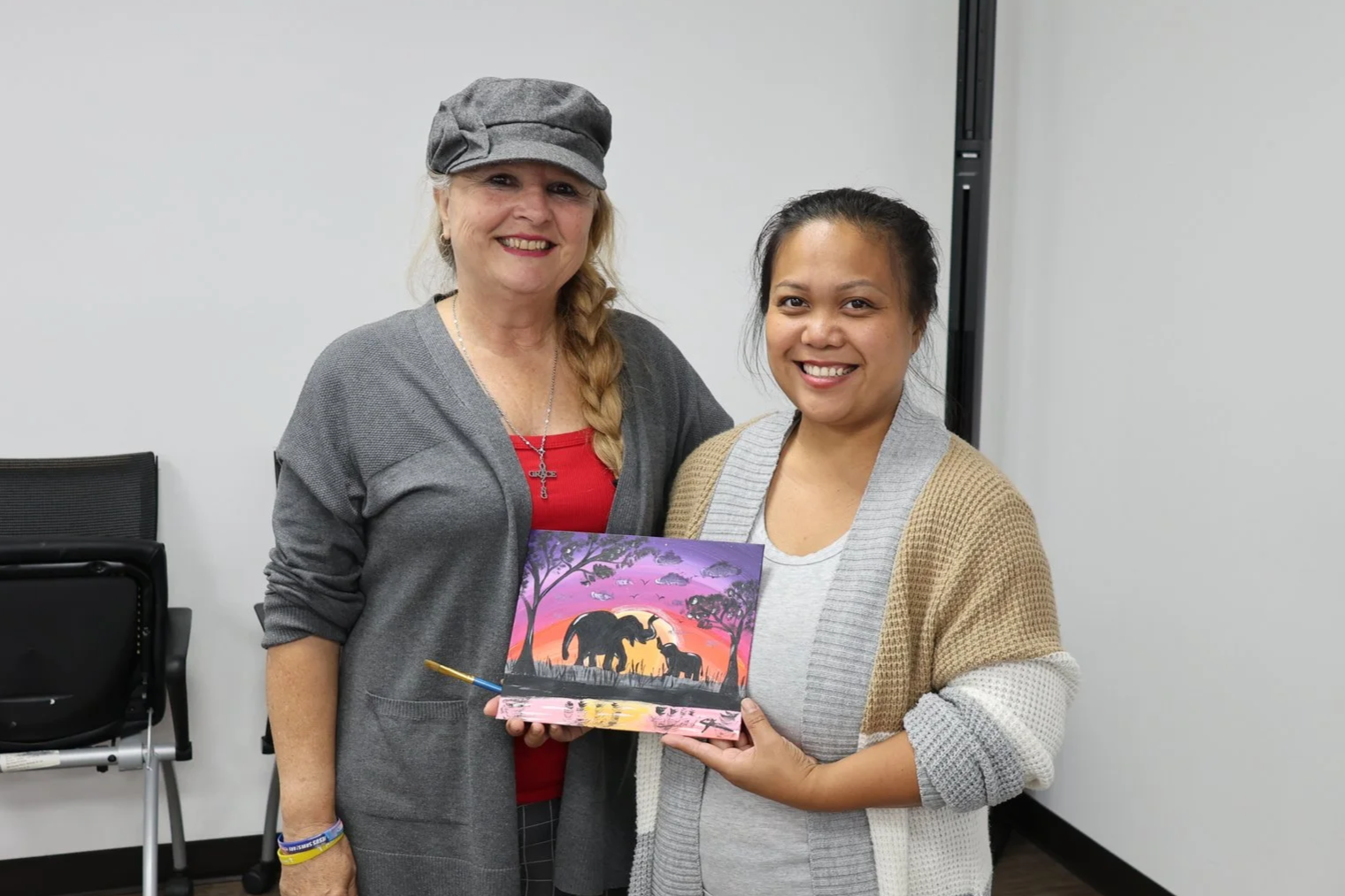
Linda with Development Director Tim Whipple (left) and Resident Assistant Keith Franklin (right). October 2026.

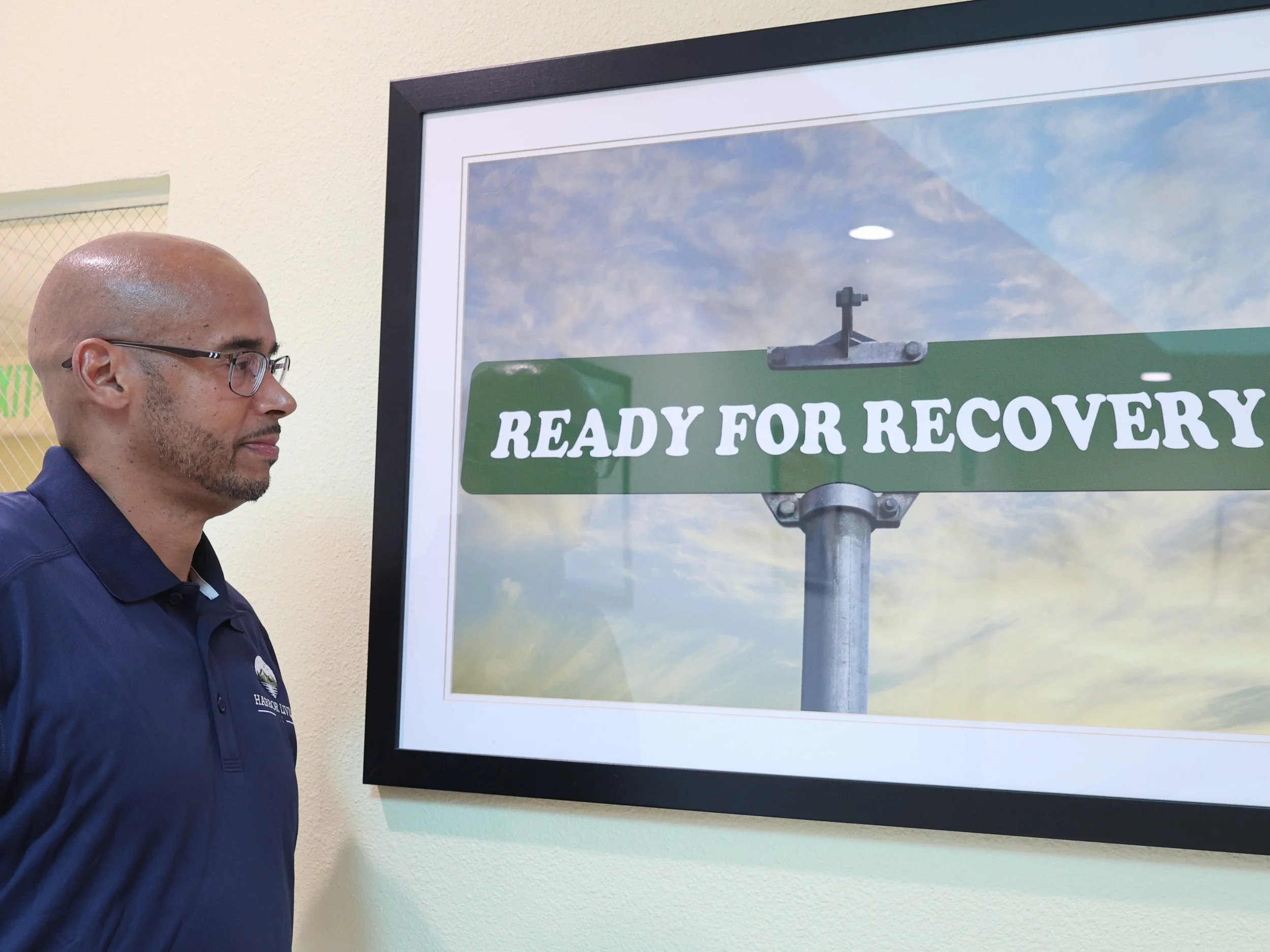
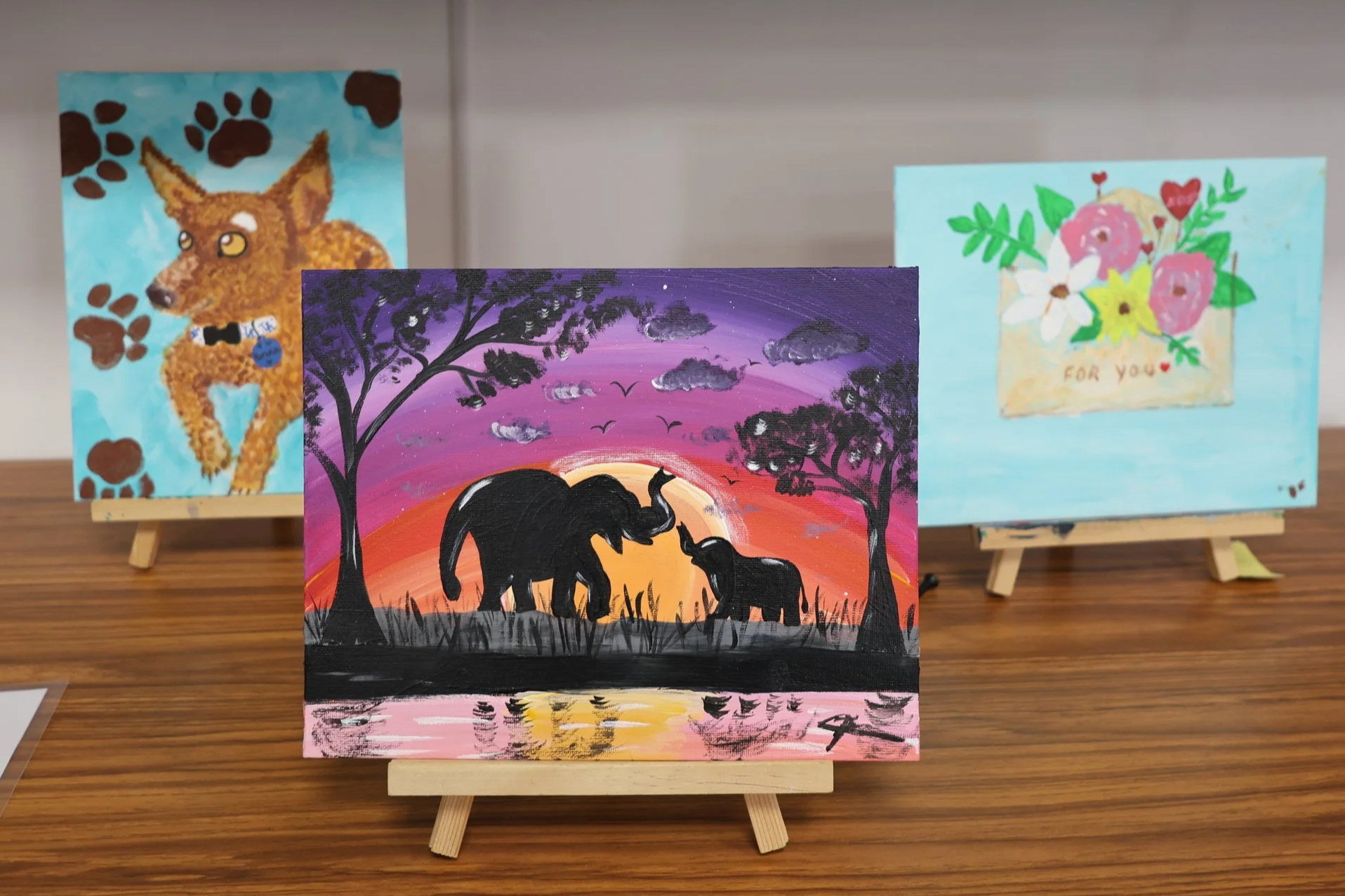
Uptown Safe Haven residents and staff at the annual UTSH Art Show. October 2026.

How ACCORD and C-HRT Safe Haven Helped Princeton Thrive

Princeton found his footing with support from ACCORD and C-HRT’s services. October 2025.

When Princeton and his son’s mother drove down to San Diego from LA one day in 2017, he had no idea how his life was about to change. 

The birth of Princeton’s son was unplanned; Princeton had known his son’s mother for only a few months before she became pregnant. He recalled feeling excited to become a father, but also heavy due to the nature of the situation. 

In San Diego, they got into an argument over a parenting disagreement. Princeton felt tired of having no control over his own life, his role as a father, or the family life he had envisioned, so he decided to stay in San Diego on his own. 

Due to his sudden change in plans, Princeton had nowhere to go and ended up living on the street, but it wasn’t long before he found direction. While in the lunch line at Father Joe’s, recruiters offered him the chance to go to school with financial aid. “I was like, ‘alright, I'm homeless on the streets. The only way I'm gonna get off these streets, I'm gonna have to start and do something positive,’” he said. 

He began his program and got a job while going to school, waking up every morning at 5 a.m. to pack up his tent and prepare for the day ahead. 

Some things were looking up for Princeton, but the reality of his situation did not escape him. Still homeless and dealing with his choice to leave his family, Princeton turned to alcohol to cope with the mental weight of his decision. 

After some time, Princeton moved into an apartment and became sober for several years. When his mother passed away in 2021, Princeton remained steady and did not turn back to alcohol even in his grief. But two years later in 2023, he got a phone call that his brother had passed, as well. “So, then I got back to drinking and I couldn't stop. I got careless.”   

Substance use disorder (SUD) overtook Princeton’s life and before long he got a DUI. His aunt, who helped raise him, passed away and his grief led him to drink at the funeral. “I got into it with my sister out there, and so she wouldn't let me sleep at her house, so my drunk self tried to drive all the way back from LA to San Diego,” he said. “I hit two cars.” 

Princeton’s sister bailed him out of jail, and he was ordered to complete a six-month program at ECS ACCORD (Alcohol Counseling Community Outreach Drop-In) DUI program. 

ACCORD was a positive force in Princeton’s life. “The staff there were very helpful, my instructor was very considerate of me and my peers there,” he said. “That's why I'm here right now, I'm recovered, I'm doing amazing. I know better.” 

Princeton’s recovery journey had begun, but he had landed back in a state of homelessness. In 2024, Princeton was living in a large shelter. He shared that it was difficult for him to continue recovery in that environment. “A typical shelter, you're not going to get no peace there,” he said. “You can be doing everything positive... there's just too many negative distractions.”   

The security of C-HRT allows residents to focus on bettering their lives. October 2025.

Fortunately, Family Health Centers referred him to ECS C-HRT Safe Haven. Princeton was grateful to have “something more grounded; somewhere where I can thrive and work on myself.” 

Funny enough, Princeton did not know that ACCORD and C-HRT were both ECS programs, but both just so happened to be there to give him support when he needed it. “That's pretty divine,” he commented.  

The safety and stability of C-HRT was a “golden opportunity” for Princeton. “You got a free chance to really get your life together,” he said. 

While it wasn’t easy and he stumbled from time to time in the beginning, Princeton worked hard to better himself and now he is in recovery, working, and feeling great. 

Princeton shared how the comfort of C-HRT and the variety of amenities, provide much needed support for residents. Companionship is also a key part of the C-HRT support system. “I had a number of heartfelt conversations, motivated conversations from some of the most broken people here uplifting me at times and just gave me inspiration and motivation to go above my means or above the clouds,” Princeton shared. “There's a good spirit here. A great spirit here.” 

Princeton’s experience has inspired him to give back to others. Whether it's purchasing and setting up a tent for a homeless man he sees every day, so he has shelter from the rain or buying a bag of ice for a woman in need, he aims to give back as much as he can. 

He also takes pride in doing his part to care for the C-HRT facility, taking out the trash, vacuuming, and keeping his home clean. “You got to take care of your home,” he said. “This is our place. I'm like, ‘give back the blessing.’ The blessing gave you a bed and a blanket.” 

C-HRT provides more than just physical housing. It gives people like Princeton a place to work on themselves and create new beginnings. 

“I have self-obedience... [I] stay calm, stay peaceful, especially underneath pressure. Especially when [the world is] trying to test you, just stay kind,” Princeton shared. “The world is what you make it here.”  

ECS offers a variety of programs, all with the goal of breaking barriers and transforming communities. Learn more about the services of ACCORD and C-HRT Safe Haven that uplift our neighbors in need. 

Sailing Through Rough Waters

With the help of C-HRT, Daniel succeeds in his ambitions. October 2025.

When times are tough, it often feels as if we are swimming through crashing waves, barely staying afloat. Making it through rough water – something everyone faces in one form or another – is a lot easier with a boat and people to help you paddle through. That’s what Daniel found at ECS Community Harm Reduction Team (C-HRT) Safe Haven. 

Daniel, a C-HRT resident for just over two years, faced unexpected challenges after leaving prison, despite working hard to turn his life around. He engaged in self-help work, rehabilitation, and began the journey toward getting his degree. He was told by his parents that because he worked for a fresh start, he could move back home.  

However, Daniel’s introduction back into society was not as seamless as he had hoped. His parents changed their minds, and Daniel was left with no clear direction on what to do next. 

He described the situation as frustrating. “It was a feeling of a rug being pulled from under me,” Daniel said. “I wasn’t supposed to be homeless.” 

Daniel is a self-described problem solver. He recalled thinking, “‘This can't be it. There has to be a solution... There has to be a better outcome.’” 

His sister did what she could to help and bought Daniel a hotel room for a few days so he could find a solution. “I put in so much work going to college while incarcerated, doing self-help, and working on my rehabilitation and sobriety that I wasn't going to allow going back to the street to trigger me and then compromise my rehabilitation,” he said.  

He contacted someone at Alpha Project and was offered a spot. Daniel had somewhere off of the streets to stay, but it was difficult to continue his education and rehabilitation in that environment. Thankfully, about a year later, Daniel received an opportunity to move to ECS C-HRT Safe Haven.   

The living-style of C-HRT provides comfort, safety, and freedom for residents. *March 2024.

“They said it was more apartment-like. It was closer to living in your own space,” Daniel said. The idea of privacy and increased safety pushed Daniel to quickly accept the offer. He shared that it’s the little things like free hygiene items and space to store his belongings that make a huge difference. 

When Daniel moved to C-HRT, he was ready to hit the ground running and pursue his goals, no matter how hard he had to work. “I had nonstop interviews, nonstop resume building. I was going to class, going to school, learning trig,” he said.  

While Daniel did not have excessive down time while at C-HRT, the time he did get to spend at the program was spent meaningfully with the staff and other residents. Before C-HRT, “I might have been smiling all the time, but I didn't really have a social life,” Daniel shared. “I still struggle with social interactions. But this place – being so close in cohabitation – allowed me to learn.” 

One of the best places for community and support Daniel found was a bible study led by C-HRT program manager Taliea Burton. “We started going to [Pacific Beach] right there on the water and reading scripture,” Daniel said. “Spirituality is a big part of my life… It's kind of nice to get close to those people and bond over that.” 

Daniel described C-HRT as a tool and a steppingstone. It allowed him the safety and support needed to succeed. When asked what his journey may have looked like without C-HRT, Daniel responded, “It would have been harder. I think I would have swam. I would have built a boat. But it would have been definitely like fighting against the current. It would have felt like I had my head barely above the water.” C-HRT helped Daniel build a sturdy boat that could carry him over the waves. Now, he is living independently in his own apartment, working, and studying computer science in school. He is currently projected to graduate in the Fall of 2026 with plans to further his studies at San Diego State University.  

Daniel used C-HRT as a stepping stone to a brighter future. October 2025.

C-HRT was a much-needed steppingstone along Daniel’s path. “It's a step forward in the right direction. We're all going to have bad moments. It's up to you to see through that and get the help you need,” he said. “Use this place for what they're offering it to be used for. It's your own shower, your own bathroom... rest easy and know that you get to wake up and go find a job or work hard and come home to a safe place to put your head down.” 

C-HRT Safe Haven is transitional housing for individuals living with chronic substance use conditions. To learn more about the work of C-HRT Safe Haven, visit https://www.ecscalifornia.org/c-hrtsafehaven.  

*Caption dates may not be exact.

Lighting Up With Joy: Family-to-Family 2025

A little girl beams standing with her gifts from Family-to-Family. December 2024.

Family-to-Family for the Holidays is one of ECS’ most beloved traditions. Each year, people sign up to sponsor ECS families and help provide gifts for the holiday season. The holidays are a special time of year, and no child deserves to go without. In 2025, Family-to-Family will provide gifts for 383 neighbors from 88 families.

Family-to-Family requires the work of many ECS staff members, including Family Engagement Specialist Heidi Avent.

Since the Family-to-Family program first started, Heidi has been involved as a coordinator, working with family service technicians (FSTs), site supervisors, and home visitors to select families that would benefit from the program.

This year, the process has shifted so that staff who interact more closely with the families are leading the selection process, but Heidi is thrilled to continue to watch the program grow and bring Christmas magic to dozens of families. “It’s been a blessing,” she said.

ECS provides gifts for the entire family. December 2024.

Family-to-Family brings holiday magic to those in need. December 2024.

Heidi shared that Family-to-Family is “one of the main resources for our families for the holidays.” Without it, the holidays would be a far more difficult time.

Family-to-Family would not be possible without the sponsors who volunteer to provide gifts for ECS families. Heidi expressed her appreciation for the sponsors. “The donations that the donors give to the families – it’s amazing, my mouth drops. They take the time to get what the families requested and make the families feel special this time of year,” she said. “I’m so thankful to know there are actually people out there who care and take the time to care for our families.”

Carly Montagne, CFO at Torrey Pines Landscape Company, has been a Family-to-Family sponsor for three years. The first year, she signed up as an individual, and after that she sponsored with her colleagues at Torrey Pines Landscape Company. “Everyone gets so excited, it makes everybody feel super in the Christmas spirit since they’re doing something for someone,” she said.

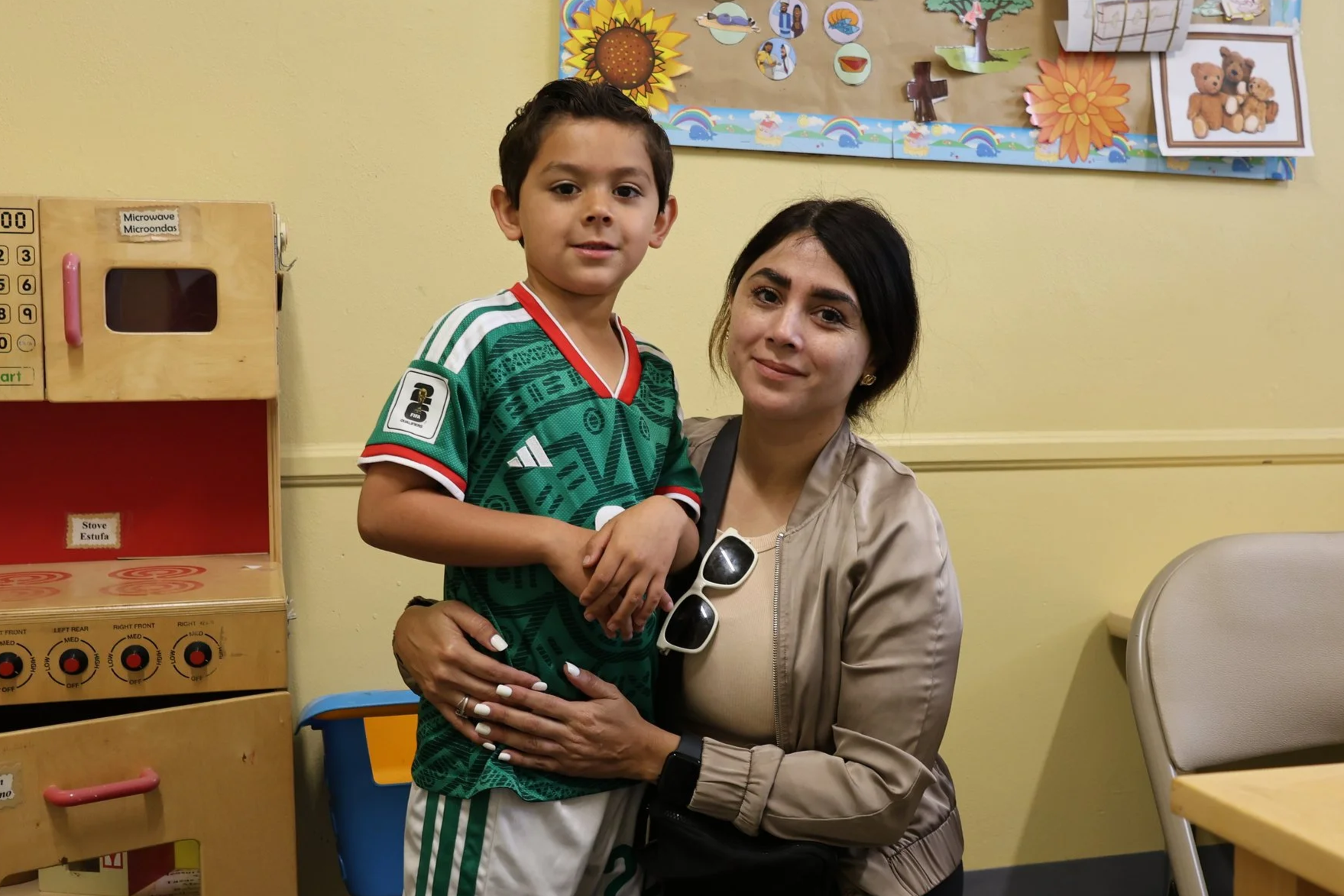
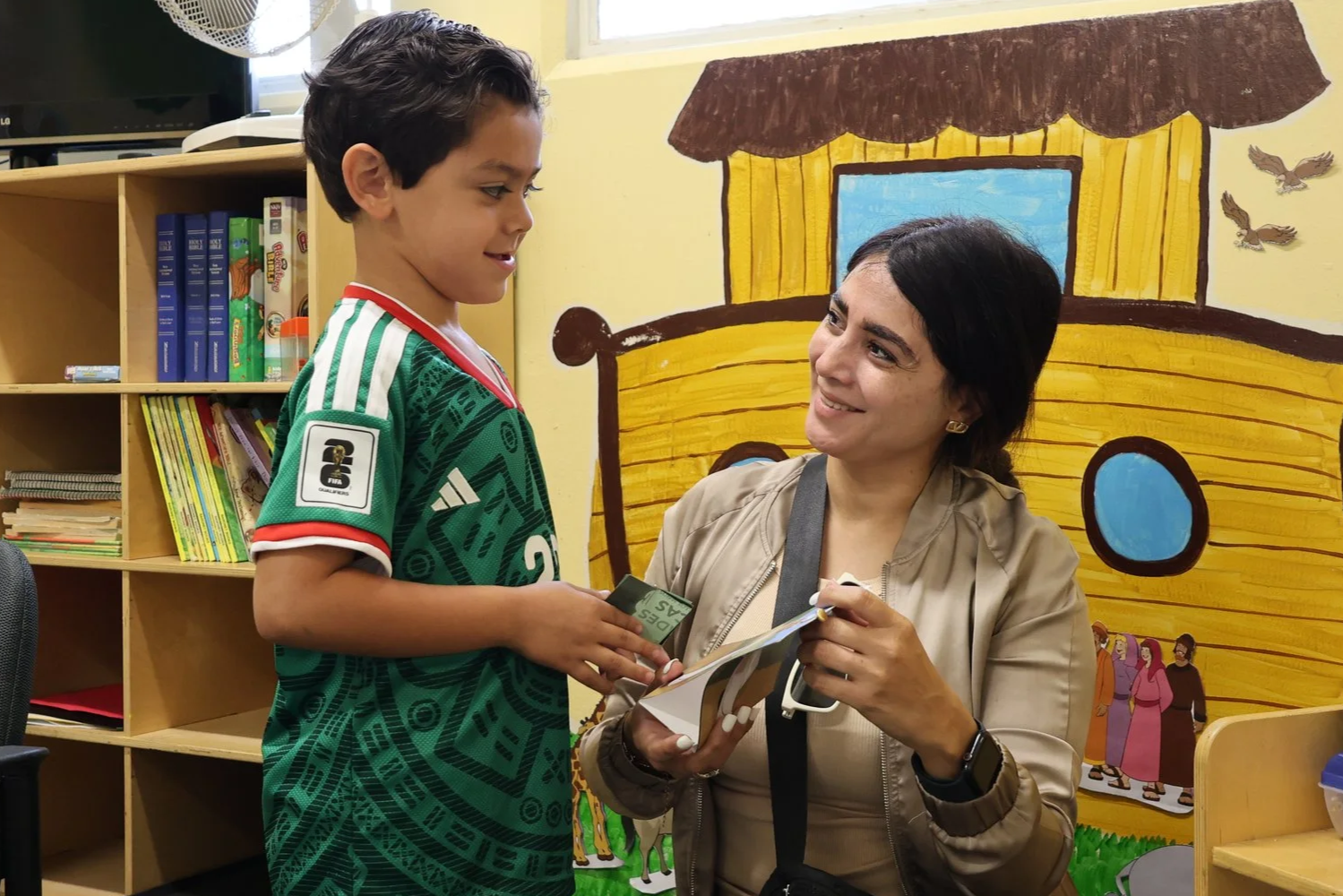
A mother and child smile with their gifts. December 2024.

An Episcopalian and member of St. Alban’s Episcopal Church, Carly has volunteered with her parish in many ways over the years. When she saw the sign up for Family-to-Family in the Diocese newsletter, she decided to try a new way of giving back and sponsor a family.

Carly recalled her first trip delivering gifts to her sponsored family. “The mom was crying the entire time, ‘this is all for us? I can’t believe it.’ I was in tears the whole drive home,” she said.

Carly showcases neighborly love and holiday spirit by going above and beyond with her sponsor duties. The first year she sponsored, she volunteered to take on an additional family who had no sponsor match. This year, she asked ECS again about any unmatched families, and through her family, friends, and colleagues, Carly found matches for six additional families.

“Anything we can do to support and give back is one of the most important things we can do,” she said. “That’s what Jesus would want, he said ‘give them the shirt off your back,’ so how can I do less?”

This year, ECS is inviting all of its community members to reflect on how they light the season with love. Carly shared that “to me, it means there is no Christmas without love... love should light our lives and our decisions; the world would be a much better place.”

Family-to-Family sponsors are touching hearts and lives through their generosity, lighting up the season for children excited to receive gifts, and even more for parents who get to see joy on their children’s faces.

“You just see the joy and appreciation in their faces, that ECS is able to help them. It’s helped so many families in our community,” Heidi shared. “It’s a season of hope; they’re giving hope to our families.”

To learn more ways you can give hope to ECS families, students, and clients, visit https://www.ecscalifornia.org/ways-to-give.

Sponsoring a family creates real impact and lasting memories. December 2024.

Family-to-Family creates hope and happiness for dozens of families each year. December 2024.